

Latest news from our suppliers.
-

BIOTIUM | Protocol: DNA Probe Labelling by PCR
This protocol can be adapted to use dUTP or dCTP labelled with other dyes, biotin, or haptens like digoxigenin. See Biotium’s full selection of labelled nucleotides.
Read More -
BIOTIUM | Protocol: Using Pluronic® F-127 to Solubilize Dyes for Cell Loading
Pluronic® F-127 is a nonionic detergent useful for solubilizing hydrophobic molecules in aqueous solutions. Pluronic® F-127 is commonly used to solubilize hydrophobic AM ester forms of fluorescent indicator dyes for calcium and other ions for loading of the dyes into cells. It also can be used to solubilize other hydrophobic dyes or compounds to facilitate […]
Read More -

BIOTIUM | Protocol: Succinimidyl Ester Labelling of Protein Amines
Dyes functionalized with succinimidyl ester (NHS Ester or SE) groups can be used to covalently label proteins on primary amines (typically lysine residues) to form a stable amide linkage.
Read More -
BIOTIUM | Protocol: Maleimide Labelling of Protein Thiol
Maleimide labelling of antibodies can be used as an alternative to succinimidyl ester labelling of amines, for antibodies where amine labelling affects the antibody binding affinity.
Read More -
BIOTIUM | Protocol: Aminooxy Labelling of Glycoproteins
Aminooxy labelling can be used to conjugate glycoproteins after oxidation of the carbohydrates to generate aldhehyde groups.
Read More -

DeNovix | What’s the Difference Between ATAC-seq and RNA-seq?
Modern genomic research has been tremendously advanced by a myriad of sequencing technologies. Key among these are ATAC-seq and RNA-seq, specialized techniques addressing specific facets of genomic investigation. This article delves into the nuances of these two methods, elucidating their distinctions and applications in nucleic acid sequencing.
Read More -
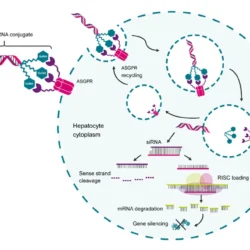
LUCIGEN | Nucleic Acid Therapeutics Toolbox: Givosiran, the first liver-targeted siRNA drug
The success of small interfering RNAs (siRNAs) therapeutics in treating rare genetic liver disorders has spurred significant investment to expand these drugs to more common conditions, from hypertension to hepatitis B.1 The growth in the field has only been possible thanks to alterations to the oligonucleotides that enhance siRNA stability and efficacy. These include nucleotide […]
Read More -
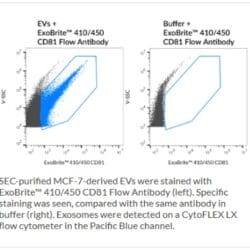
BIOTIUM | ExoBrite™ Flow Antibody Conjugates
Validated Antibodies for Detection of EV Markers by Flow Cytometry The most common proteins used as EV markers are CD9, CD63, and CD81, members of the tetraspanin family. While antibodies targeting these proteins are available by commercial suppliers, few are validated or perform well for detection of EVs or exosomes. The antibodies and dye labels […]
Read More -
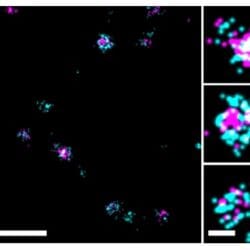
BIOTIUM | SUPER-RESOLUTION IMAGING
High-Performance EV Stains for Super-Resolution Featuring STORM-Optimized CF® Dyes Characterizing exosomes and EVs by imaging is challenging due to their small size and the resolution limits of conventional light microscopy. Super-resolution techniques like direct stochastic optical reconstruction microscopy (dSTORM) overcome these limits, providing single-molecule resolution of subcellular structures such as EVs. This enables deeper insights […]
Read More